LANGUAGE
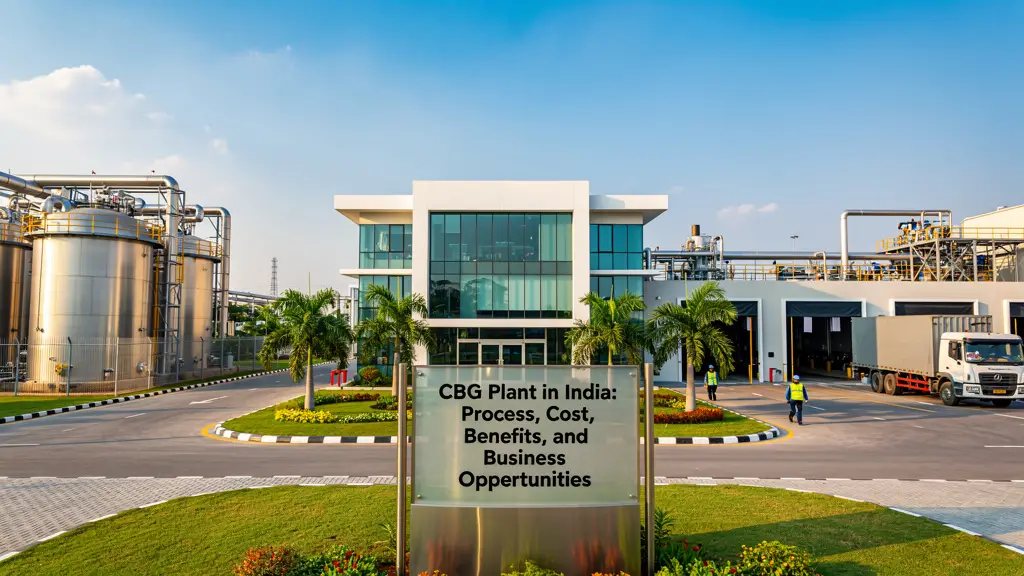
Understanding the CBG Plant Ecosystem in India
Compressed Biogas (CBG) is emerging as India's answer to sustainable energy independence. A CBG plant converts agricultural residue, cattle dung, municipal solid waste, and press mud into a clean-burning fuel comparable to CNG. With the government's SATAT scheme pushing aggressive expansion, investors across Delhi, NCR, Baghpat, Noida, Greater Noida, Shukrtaal, and Dholera are actively scouting land and technology partners to enter this high-growth sector.
The CBG Production Process Explained
The journey from raw feedstock to compressed biogas involves several precise stages:
- Feedstock collection and pre-processing of agri-waste, cattle dung, or municipal solid waste
- Anaerobic digestion inside sealed digesters to produce raw biogas
- Purification and scrubbing to remove CO2, moisture, and hydrogen sulphide
- Compression of purified methane into CBG cylinders or cascades
- Distribution to fuel stations, industrial units, or the national gas grid
The leftover slurry from this process is sold as organic fertilizer, creating an additional revenue stream that improves overall plant profitability.
Cost of Setting Up a CBG Plant in India
Setting up a CBG plant is capital intensive but highly rewarding. Costs vary based on capacity, feedstock type, and location. A plant producing around 5 tonnes per day typically requires substantial investment in digesters, purification units, and compression systems. Regions like Baghpat and Shukrtaal, rich in agricultural residue, offer natural feedstock advantages that reduce raw material transportation costs significantly.
According to the Ministry of New and Renewable Energy, India aims to establish thousands of CBG plants nationwide, backed by capital subsidies and long-term gas purchase agreements from oil marketing companies.
Why Delhi NCR and Emerging Hubs Are Ideal
Delhi and NCR generate enormous volumes of municipal solid waste daily, making it a natural hotspot for waste-to-energy CBG projects. Noida and Greater Noida offer strong industrial infrastructure and logistics connectivity for fuel distribution. Meanwhile, Dholera, positioned as a smart industrial city in Gujarat, provides dedicated industrial zoning, plug-and-play infrastructure, and policy support that make it a futuristic destination for large-scale CBG manufacturing units.
Business Benefits of Investing in CBG Plants
- Government subsidies and viability gap funding under national bioenergy programs
- Assured offtake agreements with oil marketing companies for CBG sales
- Additional income through organic fertilizer as a by-product
- Reduction in stubble burning and improved rural waste management
- Long-term contribution to India's clean energy and carbon reduction goals
Key Business Opportunities in This Sector
Entrepreneurs can explore multiple entry points into the CBG value chain, including plant manufacturing, feedstock aggregation, technology consulting, and equipment supply. With rising demand for green fuel across transport and industrial sectors, businesses that establish early presence in locations like Baghpat, Shukrtaal, and Dholera stand to gain first-mover advantages in feedstock sourcing and land availability.
If you are planning to set up a CBG plant, sourcing the right machinery, digesters, and purification systems is critical to long-term success. You can Post Your Requirement to connect with verified suppliers and manufacturers who specialize in end-to-end CBG plant solutions.
Conclusion
The CBG sector in India stands at the intersection of environmental necessity and business opportunity. From the waste-rich lanes of Delhi and NCR to the industrial ambition of Dholera, the CBG plant business offers a rare combination of government backing, assured demand, and sustainable impact for forward-thinking investors.
- Research Team

Mr Vinay Mehrotra
MD & REALTY EXPERTMr. Vinay Mehrotra is the Managing Director and Lead Real Estate Expert at Bhavya Ventures, an ISO 9001:2015 certified property portal. With over two decades of extensive experience in the Indian real estate market, he specializes in strategic property transactions across commercial, industrial, residential, and agricultural sectors. A trusted industry advisor, Mr. Mehrotra is highly regarded for his meticulous approach to property verification, risk assessment, and navigating the complex landscape of real estate compliance and regulatory frameworks in India.
Expert AI Insights (FAQs)
Q: What is the minimum investment required for a CBG plant in India?
Investment varies by capacity, but small to mid-sized CBG plants generally require significant capital for digesters, purification units, and compression systems, with government subsidies helping offset a portion of the cost.
Q: Which feedstock is best suited for CBG plants near Delhi NCR?
Municipal solid waste, agricultural residue, and cattle dung are the most viable feedstocks for CBG plants around Delhi NCR, Baghpat, and Shukrtaal due to their high local availability.
Q: Is Dholera a good location for setting up a CBG plant?
Yes, Dholera offers dedicated industrial infrastructure, favorable policy support, and strategic connectivity, making it an attractive location for large-scale CBG manufacturing.
Q: What are the by-products of a CBG plant?
The primary by-product is organic fertilizer derived from digestate slurry, which provides an additional revenue stream alongside compressed biogas sales.
Related Real Estate Concepts & Guides
Interested in this Concept?
Discover available properties in this category across India.
VIEW FULL COMMERCIAL INVENTORYEXPLORE OTHER CATEGORIES
MARKET INTELLIGENCE
Bhavya Ventures is an ISO 9001:2015 Certified brand. Our experts analyze NCR trends daily.
READ NEWS →VERIFIED STATUS
- ✅ 100% Verified Documents*
- ✅ Direct-to-Owner Inventory